Tuesday, September 02, 2008

Education Olympics Results

Thomas B Fordham Institute in Washington caught the olympic bug decided to see what happens if an education Olymics was held today.In the recently held Olymics China came first followed by US. In this first Education Olymics ever held ,the results were not unexpected.As usual physical prowess of athlets and their brain power donot often match.In todays knowledge economy,the smartest are those who learn fast.Winston Churchill in his famous speech at Harvard university in 1943 declared that all future wars will be faught for talent and skill.What he meant was that the countries with the best 'brain power ' and not 'military power' will rule the world.
A few studies have recently shown the quality of the education systems in different countries.Finland has the best education system and the Finnish kids are the smartest in learning! When it comes to brain power,the super powers are not America or Russia but small countries like Finland, Hongkong and Singapore.
We know our records in education is no better than our medal tally at the Beijing Olymics!Except a few elite institutions like the IIMs or IITs and few schools the rest is rotten.
Read further to know the medal tally at the education Olymics...........
,http://www.usnews.com/blogs/on-education/2008/8/29/a-disappointing-finish-for-americans-at-education-olympics.html?s_cid=et-0902

Monday, July 28, 2008

Fun in the Fiscal

I strongly believe that the main problem with the teaching of economics in India is the outdated text books.Most of the text books used in colleges across the country are so dull that students lose interest the very moment they see their books.If we can have simple text books very clourful and having a lot of case studies ,students interest in the subject will increase.Apart from new text books we should also encourage our teachers to use multimedia tools in the class rooms.Blogs and You Tube also have become very effective means to make the classroom lively.
The following is a report appeared in the Indian Express today on our efforts to train teachers on new technology.


Textbooks should have crosswords and colour illustrations, and classrooms should have YouTube and multimedia, believes this club of Economics teachers
Ask Economics professor Shashi Paniker what an ideal classroom should be like, and you’ll be surprised that the words ‘chalk’ and ‘blackboard’ don’t figure anywhere in the answer. Instead, you will hear about blogging, the Internet, YouTube and crossword puzzles as a means to teach what is considered by many to be one of the driest subjects in any syllabus — Economics.
It may not be a favourite with anybody apart from the geekiest collegians, but Economics certainly seems to be on a revolutionary path thanks to Paniker and the Economics Club, a voluntary group of Economics teachers who meet once a month at Mulund, and counsel and guide students to find the best way forward in terms of their studies and careers.
“Teachers need to take more interest in their subject and catch up with the young generation. They need to make the subject more interesting and interactive for students,” says Paniker. The club holds workshops around Mumbai to train teachers to use computers, aiding them to become more proficient with the Internet and to use it in their teaching. The workshops, sponsored by the Forum for Free Enterprise, are held for Economics teachers in the city, once every few months.
“We teach teachers to create blog posts and improve their writing skills. Then students can post comments and give feedback about the topic in question,” says Paniker. He also believes that for a subject like Economics, it is important to liven it up in order to get students interested, something that the archaic textbooks don’t do. So, in his lectures, Paniker introduces students to YouTube, plays videos by distinguished economist Ben Bernanke and songs that students of the Columbia Business School have created as a means to show students that Economics can actually be fun.
“The workshops help to familiarise people with the Internet, but we don’t know when they will actually come in use since it is a bit difficult to imagine students and teachers with computers in each classroom. But it is a good source and does benefit teachers,” says Dr Suniti Nagpurkar, Head of the Department of Economics at Swami Vivekananda College, who attended the last workshop held at MMK College earlier this month.
The club has meetings once a month, where the 20-30 people who attend have to speak about an economic issue. “We have discussions about one important topic and everyone gives their opinions,” says Paniker, adding that the last workshop was a huge success. We have computers for each teacher, so as to give them a chance to familiarise themselves with technology,” he says. The club plans to hold a workshop in Malad some time next month.
“Imagine textbooks with crosswords and illustrations and colour. That’s how this subject should be taught, not in books that are thirty years old,” says Paniker.

Sunday, July 27, 2008

Randy Pausch-The Teacher !

Randy Pausch was a professor of computer science at Carnegie Mellon University who passed away recently. He was recognised as a pioneer in virtual reality research and a gifted teacher and a mentor to many. His ‘never say die’ attitude inspired millions of people who saw his moving "Last Lecture" on YouTube. Go through the article on Randy Pausch in the link given below:

http://www.time.com/time/arts/article/0,8599,1826574,00.html

Tuesday, July 22, 2008

A school which provides loving care!

School Offers 'Loving' Home for Kids
In India millions of children are deprived of education since their parents are poor and always on the move looking out for work. A new initiative in China can become an inspiration for many NGOs and concerned citizens.A school set up by a couple there has become a model for helping out children whose parents are poor and always on the move.
I had some great teachers during my school days.My social studies teacher ' Paulose sir' used to tell wonderful stories and learning was great fun for all of us! Once he told us this story of a poor agricultural worker, Ramu who really wanted to go to school and learn.His parents were so poor and they couldn't afford to send him to school.When he grew up he also became an agricultural worker like his parents. But he always wanted to go to school and regularly watch childern going to school.When small children go to school with their schoolbags, laughing and talking loudly he used to think. "I am so unfortunate I couldnot go to school. When I get married and have children, I will definitely send them to the best school". He got married a few years later and the very first day itself he told his wife of his dream."Both of us will work very hard and save all the money we earn so that we can send our children to the best school in our village."Everyday used to dream of his children going to English medium school along with the children of people from the higher castes.The couple had two children ;a boy and a girl .As planned they sent them to the best school in the village.Every day when the children used to read their lessons in English both the parents would listen carefully even though they couldnt understand anything. The Ramu would very often tell his fellow workers about his children's studies.He would proudly tell them "Do you know my children go to English medium school.Your children dont even attend school."
Every night Ramu would tell his wife "I am so unfortunate I didnt have a chance to go to school". One day he declared "I am going to join a school and start learning".The wife thought that her husband has gone mad.She asked "Which school will admit you at this age.?"But he was determined.Next day he asked his son about the things one should have if he needs to go to school.His son told him innocently that anyone with a schoolbag, tiffin and waterbag can join a school. . That day he did not go to work got school uniforms ready for himself and bought books, waterbottle and other things to join school.Next day morning he went to school along with his children.Both the children were so excited that their Papa is also coming to study in the same school. The father and the children reached the school by 7.00am and he occupied a front seat in one of the classrooms.Seeing this man sitting in the classroom,lot of children gathered and they thought that he is a thief.They started screaming "Chor chor"hearing their screams the peons, teachers and the whole school rushed to the room where the "new student" was sitting.By seeing all this confusion he also got little scared and did not know what to do.When he saw teachers and peons rushing to catch him he started running.The whole schoolalso started running after him screaming"Theif, thief ,Police catch him!" Somehow he reached home and his wife asked him about his school.He said "My school is very nice.It looks like we had a P.T lesson today and I was made to run .But wait and see I will practise all the lessons tonight."In the night he decided to revise his' lessons' after the children slept..He started practising his 'lessons' repetedly " Thief thief, Police catch him!". At this time some people had looted some rich people and were sharing the loot in front of his compound.When they heard someone shouting Police and thought Police had already arrived They left in a hurry leaving all the valuable things there.
Next day Ramu was taking a round in his compound and saw all the wealth left by the thieves.He took everything home and told his wife," It looks like someone has forgotten all these things.Keep them safely and return when they come."But no one came for the wealth left behind and Ramu became the richest man in the village .My teacher used to tell us,"If Ramu studied so sincerely for just one day and became so rich,you can become richer and famous by studying sincerely everyday!".
Education is the best gift we can give our children. An educated and healthy population will be our greatest strength.This report from China is very encouraging.
Larry Abramson/NPR
The entrance to Guan Ai, which means "loving care" in Chinese. A couple opened the school to provide a warm environment for kids left behind by parents who head to big cities for work.


Migrant workers in a tiny rural village in eastern China wanted to make sure that when they left to find work in faraway cities, the kids who stayed behind got a quality education. Rather than leave their children with grandparents, parents issued a plea for a boarding school.
A local couple — both educators — responded, and in 2005, they opened Guan Ai, a private elementary school whose name means "loving care." The school's approach makes Guan Ai a refuge from the highly competitive environment at traditional Chinese schools.
Life at Guan Ai
Guan Ai is located in tiny Houjia village — home to about 500 people in China's Shanxi province. The surrounding fields are planted with asparagus and other crops, and a phalanx of rugged mountains watches over the valley. It's only 100 miles or so from the historic city of Xi'an, a tourist mecca. But economically and culturally, Houjia village is light-years away.
By Western standards, the village is desperately poor. But for rural China, it's considered prosperous. Incomes have been aided in recent years by a migration to China's big cities. Many families have traveled east to open noodle shops or other businesses.
About 200 children attend the first through sixth grades at Guan Ai, and most students live in this former public school.
The school itself is minimalist. The floors of the classrooms are perpetually dirty, as kids track in dust from a bare front yard. There are two water sources: a pair of spigots, which are used for washing everything from dishes to kids' feet.
Hygiene is tough to maintain in a place where everyone depends on the most basic of pit toilets. But hygiene and good nutrition are part of the curriculum here. At mealtimes, students line up in a courtyard to get meals from staff working inside a building that serves as the kitchen.
Against a wall in the courtyard lies "the mountain," the name for a pile of coal used for cooking. After they've eaten, the students squat down next to the outdoor spigots to wash their dishes.
Students eat lunch both outside and in a dilapidated cafeteria. The earthquake that ravaged parts of China in May did not damage the school, but it did put new urgency behind a plan to replace the cafeteria.
The students' diet includes eggs: A nonprofit organization started by a young Chinese-American woman — a former NPR intern — has helped raise the money for a campaign to get kids to eat "an egg a day."
Exploding with Energy .Guan Ali students have formed a band.The music programme is part of the school's effort to encourage interest in the arts.
In typical Chinese public schools, rote memorization is often the order of the day. Guan Ai is different.
Kids are encouraged to work in groups. They perform skits in order to encourage other students to conserve water and take good care of schoolbooks. Teachers are asked to keep journals and record observations about their classes. It's all part of an effort to foster a warmer, friendlier environment than a typical Chinese school offers.
In between classes, the students run around the dirt yard that surrounds the school, playing soccer and rope games.
The energy follows them into class. One minute they are talking excitedly; the next they are singing along with their teacher at a deafening volume. And just as suddenly, they are sitting in rapt attention as a teacher tells a story. A local grandmother comes by to teach them the art of paper cutting, and she seems to magically summon pieces of fruit and animals from scraps of paper. The kids immediately imitate her, and they create their own menagerie.
This private school receives some support from the government, but Guan Ai administrators must constantly search for new sources of funding. Guan Ai has a sister school in Menlo Park, Calif., which contributed books to Guan Ai's small library.
But the chances of these kids making it past ninth grade are not good — that's when mandatory education in China ceases. These Chinese students are more likely to go right to work. Guan Ai is one small effort to instill a more positive attitude toward school, and Guan Ai teachers hope that students who cannot or choose not to continue their formal education will leave this school better equipped to survive in rural China.

Education in Finland.

Finland's teens score extraordinarily high on an international test.Am erican educators are trying to figure out why.
This article appeared in the WSJ . educators around the world were fascinated by the performance of the children from Finland. Let's have look at the report that made waves!
By ELLEN GAMERMAN February 29, 2008
Helsinki, Finland
High-school students here rarely get more than a half-hour of homework a night. They have no school uniforms, no honor societies, no valedictorians, no tardy bells and no classes for the gifted. There is little standardized testing, few parents agonize over college and kids don't start school until age 7.
Yet by one international measure, Finnish teenagers are among the smartest in the world. They earned some of the top scores by 15-year-old students who were tested in 57 countries. American teens finished among the world's C students even as U.S. educators piled on more homework, standards and rules. Finnish youth, like their U.S. counterparts, also waste hours online. They dye their hair, love sarcasm and listen to rap and heavy metal. But by ninth grade they're way ahead in math, science and reading -- on track to keeping Finns among the world's most productive workers.
The Finns won attention with their performances in triennial tests sponsored by the Organization for Economic Cooperation and Development, a group funded by 30 countries that monitors social and economic trends. In the most recent test, which focused on science, Finland's students placed first in science and near the top in math and reading, according to results released late last year. An unofficial tally of Finland's combined scores puts it in first place overall, says Andreas Schleicher, who directs the OECD's test, known as the Programme for International Student Assessment, or PISA. The U.S. placed in the middle of the pack in math and science; its reading scores were tossed because of a glitch. About 400,000 students around the world answered multiple-choice questions and essays on the test that measured critical thinking and the application of knowledge. A typical subject: Discuss the artistic value of graffiti.
The academic prowess of Finland's students has lured educators from more than 50 countries in recent years to learn the country's secret, including an official from the U.S. Department of Education. What they find is simple but not easy: well-trained teachers and responsible children. Early on, kids do a lot without adults hovering. And teachers create lessons to fit their students. "We don't have oil or other riches. Knowledge is the thing Finnish people have," says Hannele Frantsi, a school principal.
Visitors and teacher trainees can peek at how it's done from a viewing balcony perched over a classroom at the Norssi School in Jyväskylä, a city in central Finland. What they see is a relaxed, back-to-basics approach. The school, which is a model campus, has no sports teams, marching bands or prom.
Fanny Salo in class
Trailing 15-year-old Fanny Salo at Norssi gives a glimpse of the no-frills curriculum. Fanny is a bubbly ninth-grader who loves "Gossip Girl" books, the TV show "Desperate Housewives" and digging through the clothing racks at H&M stores with her friends.
Fanny earns straight A's, and with no gifted classes she sometimes doodles in her journal while waiting for others to catch up. She often helps lagging classmates. "It's fun to have time to relax a little in the middle of class," Fanny says. Finnish educators believe they get better overall results by concentrating on weaker students rather than by pushing gifted students ahead of everyone else. The idea is that bright students can help average ones without harming their own progress.
At lunch, Fanny and her friends leave campus to buy salmiakki, a salty licorice. They return for physics, where class starts when everyone quiets down. Teachers and students address each other by first names. About the only classroom rules are no cellphones, no iPods and no hats.
TESTING AROUND THE GLOBE

Every three years, 15-year-olds in 57 countries around the world take a test called the Pisa exam, which measures proficiency in math, science and reading.
• The test: Two sections from the Pisa science test
• Chart: Recent scores for participating countriesDISCUSS

Do you think any of these Finnish methods would work in U.S. schools? What would you change -- if anything -- about the U.S. school system, and the responsibilities that teachers, parents and students are given? Share your thoughts.
Fanny's more rebellious classmates dye their blond hair black or sport pink dreadlocks. Others wear tank tops and stilettos to look tough in the chilly climate. Tanning lotions are popular in one clique. Teens sift by style, including "fruittari," or preppies; "hoppari," or hip-hop, or the confounding "fruittari-hoppari," which fuses both. Ask an obvious question and you may hear "KVG," short for "Check it on Google, you idiot." Heavy-metal fans listen to Nightwish, a Finnish band, and teens socialize online at irc-galleria.net.
The Norssi School is run like a teaching hospital, with about 800 teacher trainees each year. Graduate students work with kids while instructors evaluate from the sidelines. Teachers must hold master's degrees, and the profession is highly competitive: More than 40 people may apply for a single job. Their salaries are similar to those of U.S. teachers, but they generally have more freedom.
Finnish teachers pick books and customize lessons as they shape students to national standards. "In most countries, education feels like a car factory. In Finland, the teachers are the entrepreneurs," says Mr. Schleicher, of the Paris-based OECD, which began the international student test in 2000.
One explanation for the Finns' success is their love of reading. Parents of newborns receive a government-paid gift pack that includes a picture book. Some libraries are attached to shopping malls, and a book bus travels to more remote neighborhoods like a Good Humor truck.
Ymmersta school principal Hannele Frantsi
Finland shares its language with no other country, and even the most popular English-language books are translated here long after they are first published. Many children struggled to read the last Harry Potter book in English because they feared they would hear about the ending before it arrived in Finnish. Movies and TV shows have Finnish subtitles instead of dubbing. One college student says she became a fast reader as a child because she was hooked on the 1990s show "Beverly Hills, 90210."
In November, a U.S. delegation visited, hoping to learn how Scandinavian educators used technology. Officials from the Education Department, the National Education Association and the American Association of School Librarians saw Finnish teachers with chalkboards instead of whiteboards, and lessons shown on overhead projectors instead of PowerPoint. Keith Krueger was less impressed by the technology than by the good teaching he saw. "You kind of wonder how could our country get to that?" says Mr. Krueger, CEO of the Consortium for School Networking, an association of school technology officers that organized the trip.
Finnish high-school senior Elina Lamponen saw the differences firsthand. She spent a year at Colon High School in Colon, Mich., where strict rules didn't translate into tougher lessons or dedicated students, Ms. Lamponen says. She would ask students whether they did their homework. They would reply: " 'Nah. So what'd you do last night?'" she recalls. History tests were often multiple choice. The rare essay question, she says, allowed very little space in which to write. In-class projects were largely "glue this to the poster for an hour," she says. Her Finnish high school forced Ms. Lamponen, a spiky-haired 19-year-old, to repeat the year when she returned.
At the Norssi School in Jyväskylä, school principal Helena Muilu
Lloyd Kirby, superintendent of Colon Community Schools in southern Michigan, says foreign students are told to ask for extra work if they find classes too easy. He says he is trying to make his schools more rigorous by asking parents to demand more from their children.
Despite the apparent simplicity of Finnish education, it would be tough to replicate in the U.S. With a largely homogeneous population, teachers have few students who don't speak Finnish. In the U.S., about 8% of students are learning English, according to the Education Department. There are fewer disparities in education and income levels among Finns. Finland separates students for the last three years of high school based on grades; 53% go to high school and the rest enter vocational school. (All 15-year-old students took the PISA test.) Finland has a high-school dropout rate of about 4% -- or 10% at vocational schools -- compared with roughly 25% in the U.S., according to their respective education departments.
Another difference is financial. Each school year, the U.S. spends an average of $8,700 per student, while the Finns spend $7,500. Finland's high-tax government provides roughly equal per-pupil funding, unlike the disparities between Beverly Hills public schools, for example, and schools in poorer districts. The gap between Finland's best- and worst-performing schools was the smallest of any country in the PISA testing. The U.S. ranks about average.
Finnish students have little angstata -- or teen angst -- about getting into the best university, and no worries about paying for it. College is free. There is competition for college based on academic specialties -- medical school, for instance. But even the best universities don't have the elite status of a Harvard.
Students at the Ymmersta School near Helsinki
Taking away the competition of getting into the "right schools" allows Finnish children to enjoy a less-pressured childhood. While many U.S. parents worry about enrolling their toddlers in academically oriented preschools, the Finns don't begin school until age 7, a year later than most U.S. first-graders.
Once school starts, the Finns are more self-reliant. While some U.S. parents fuss over accompanying their children to and from school, and arrange every play date and outing, young Finns do much more on their own. At the Ymmersta School in a nearby Helsinki suburb, some first-grade students trudge to school through a stand of evergreens in near darkness. At lunch, they pick out their own meals, which all schools give free, and carry the trays to lunch tables. There is no Internet filter in the school library. They can walk in their socks during class, but at home even the very young are expected to lace up their own skates or put on their own skis.
The Finns enjoy one of the highest standards of living in the world, but they, too, worry about falling behind in the shifting global economy. They rely on electronics and telecommunications companies, such as Finnish cellphone giant Nokia, along with forest-products and mining industries for jobs. Some educators say Finland needs to fast-track its brightest students the way the U.S. does, with gifted programs aimed at producing more go-getters. Parents also are getting pushier about special attention for their children, says Tapio Erma, principal of the suburban Olari School. "We are more and more aware of American-style parents," he says.
Mr. Erma's school is a showcase campus. Last summer, at a conference in Peru, he spoke about adopting Finnish teaching methods. During a recent afternoon in one of his school's advanced math courses, a high-school boy fell asleep at his desk. The teacher didn't disturb him, instead calling on others. While napping in class isn't condoned, Mr. Erma says, "We just have to accept the fact that they're kids and they're learning how to live."
Write to Ellen Gamerman at ellen.gamerman@wsj.com

Face Book Ignites Entrepreneurial Spirit.

This is an article from the Wall Street Journal on how Face Book ignites entrepreneur spirit in the campuses.I thought this article would be a great eye opener for youngsters and pasted here!!
ENTERPRISE http://online.wsj.com/article/SB121124707865805855.html?mod=2_1559_middlebox
Face Book Ignites Entrepreneurial Spirit at Harvard
Students, Graduates Start Firms, Using The Site as a Model
By VAUHINI VARA
One day during Trip Adler's sophomore year at Harvard University, he saw fellow undergraduates Mark Zuckerberg and Dustin Moskovitz outside their dormitory with suitcases and boxes. When Mr. Adler asked what the two -- who happened to be Facebook Inc.'s co-founders -- were doing, Mr. Moskovitz lightly replied that they were moving from Cambridge, Mass., to Silicon Valley "to make Facebook big."
"I was so jealous," recalls Mr.Adler, now 23 years old. "I thought, 'I've got to find an idea and drop out of Harvard.'"
INDEPENDENT STREET BLOG

Teen jobs: Think Facebook, not pizza delivery. Read Wendy Bounds's post and share your thoughts.
Mr. Adler didn't leave school, but after graduating in 2006, he did start an online document-sharing company. San Francisco-based Scribd Inc., employs 12 people and attracts 11.1 million monthly visitors, according to Web-tracking company comScore Inc. It has raised nearly $3.9 million from Redpoint Ventures and other venture-capital and individual investors.
Mr. Adler is just one of the Harvard students who have caught start-up fever since Facebook, founded when Mr. Zuckerberg was at Harvard in 2004, exploded in popularity. Other recent Harvard-born start-ups include Internet companies Kirkland North Inc., Drop.io Inc. and Labmeeting Inc. And Facebook has become a model for these start-ups on many fronts, from the look of company Web sites to their corporate strategies.
"I would not hesitate for a second to say Facebook's a motivator," says Paul Bottino, director of Harvard's Technology & Entrepreneurship Center. "Facebook creates would-be Facebooks." He says a start-up contest this year attracted 55 entries, up from 10 to 18 for past contests.
'Noticeably Behind'
Facebook isn't the only well-known start-up spawned at Harvard. In the 1970s, Bill Gates dropped out of the school to found Microsoft Corp. But that didn't produce the immediate copycat phenomenon that Facebook is seeing, because start-ups then took more money and time to get off the ground, let alone rise to national prominence. By the time Microsoft became known in the early 1990s, many of Mr. Gates's former classmates were settled in their adult lives and had less inclination to follow in his footsteps than Mr.Zuckerberg's peers do now.
And the idea of a college start-up culture isn't new to Silicon Valley. Stanford University leased land to Hewlett-Packard Co., started by Stanford alums, as far back as the 1950s. Today, Stanford President John Hennessy is a board member at Cisco Systems Inc. and Google Inc., two companies that began as projects at Stanford. Yahoo also began as a Stanford project.
Harvard, though, has long had a relatively sleepy start-up culture and has shunned a cozy relationship between academics and industry. "Harvard is very noticeably behind," says Paul Graham, a partner at Y Combinator, a Cambridge, Mass., and Mountain View, Calif., company that invests in start-ups, including Scribd and Kirkland North.
Mr. Graham, who earned a doctoral degree at Harvard in 1990, started Viaweb Inc., an online-commerce company that was acquired by Yahoo in 1998. He and others around the university in the 1990s recall few Harvard-born tech start-ups besides Viaweb and LinkExchange, a Web-advertising company that was sold to Microsoft in 1998.
Now, Harvard is taking steps to get ahead. In 2000, the university loosened a rule prohibiting students from running companies from dorm rooms, but it still required that start-ups notify the university of their existence and "gain approval." Last year, it discarded the notification-and-approval rule, although some restrictions still exist.
In the past eight years, Harvard has introduced more classes, clubs and contests for entrepreneurs. Mr. Bottino says those decisions weren't directly related to Facebook, but he acknowledges that Facebook's success has given Harvard students a more-entrepreneurial bent.
I Want to Be Like Mark
Indeed, Mr. Zuckerberg has quickly become a Harvard celebrity. Graduate Matthew Siegel remembers a college-holiday ski trip to Colorado that Messrs. Zuckerberg and Moskovitz went on during Facebook's early days. Instead of skiing, Mr. Siegel recalls, the Facebook co-founders spent their days camped in the lobby of a nearby Ritz-Carlton hotel where they went online and worked on Facebook.
"I was like, 'Why are those guys just sitting around working?'" Mr. Siegel recalls. "Now, I'm like, 'Oh. That's why.'"
Over the past few years, privately held Facebook, based in Palo Alto, Calif., has grown from a handful of workers to about 550 employees. The social-networking site attracted 109.2 million visitors in March, according to comScore. Last year, Microsoft bought a 1.6% stake in Facebook for $240 million, valuing the start-up at $15 billion.
"It's really exciting for me when I hear that people from Harvard or anywhere are building interesting things," says Mr. Zuckerberg, 24. "To think that they were in some way inspired by what we've done is really flattering."
Among them is Mr. Siegel. After graduating from Harvard in 2005, he went to work for a management-consulting firm. Inspired by Messrs. Zuckerberg and Moskovitz, he quit after several months to work on Indaba Media LLC, which lets musicians collaborate online. IndabaMusic.com launched in February 2007.
A month later, Mr. Adler's Scribd opened to the public.
Last August, Sam Lessin, Mr. Siegel's friend and a fellow Harvard grad, left his management-consulting job to work on Drop.io, a file-sharing service. New York-based Drop.io has raised $3.9 million from RRE Ventures, DFJ Gotham and other venture-capital investors.
Doing as Facebook Does
Many of the start-ups avoid comparing themselves to Facebook because they want to be judged on their own merits. Nonetheless, they say Facebook's approach has served as a model in one way or another.
Labmeeting, a community Web site for scientists started by Mr. Adler's college roommate, uses a log-in page that resembles an old Facebook log-in page. Founder Mark Kaganovich, 23, says Labmeeting tries "to move away from the Facebook look and feel" to avoid comparisons but he and others at his company were probably "influenced" by Facebook's design.
Meanwhile, Kirkland North, an online-game company founded this year by three recent Harvard graduates and one Yale University graduate, launched its game at Stanford and now plans on expanding to other colleges before opening publicly -- an approach that allowed Facebook to control its early growth. The Web-based strategy game, called Turf, organizes players into teams based on where they live on a college campus, another idea reminiscent of Facebook, which organizes its users into "networks" based on where they live.
Mr. Adler, for his part, is studying Mr. Zuckerberg himself. Through a Scribd investor, he recently scored a dinner meeting with Mr. Zuckerberg, who advised him to keep control over his "strategic vision," as he has done at Facebook.
"We're just focused on building a good product," Mr.Adler says of Scribd, echoing comments Mr. Zuckerberg often has made publicly.
There is one thing Mr. Adler admits will always set him apart from Messrs. Zuckerberg and Gates: He earned a degree from Harvard. "I can never take it back," he says. "I'll always be a graduate."

My Blog List

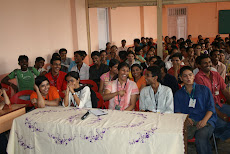
Econ Fest 2008

Econ Fest 2008
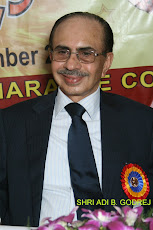
Mr Adi Godrej at the Inauguration Ceremony

Econ Fest 2008

Econ Fest 2008
Inter- collegiate Quiz

My Fav books

  • The world is Flat by Thomas Friedman
  • Principles of Economics by Ben Bernanke
  • Micro Economics by Michael Parkin
  • Principles of Economics by Mankiw
  • Arthur Hailey-Money Changers, Hotel, Wheels, Final Diagnosis
  • Barack Obama , The New face of American Politics
  • Undercover Economist - Tim Harford
  • Freakonomics
Powered By Blogger