Tuesday, March 30, 2010

Education is an Experience!

Recently Dr Andrew Hamilton was in India . He is the 271st Vice-Chancellor of the prestigious Oxford University. In an interview to The Times of India in New Delhi,he elaborated his strategy for the University.When asked about opening a campus in India ,he peplied that learning at Oxford is a life-time experience and 'Oxford cannot be franchised like hamburgers'.
Very true. Education is a lifelong experience to be cherished by every person through out his life.His interview is quite relevant at a time when India is planning to invite foreign universities to open campuses here. http://timesofindia.indiatimes.com/home/opinion/interviews/Oxford-cannot-be-franchised-like-hamburgers/articleshow/5733672.cms

Sunday, March 14, 2010

Prize winners at Arthmanthan 2010

1. Quiz Wiz (Degree college)

1st – Vaze College, Mulund (Dipali Patil, Sneha Jain, Jayawanti, Renu, Radhika)

2nd – N.G.Acharya College, Chembur (Rahul, Sushant, Nilesh, Avadhut, Hari)

2. Quiz Wiz (Junior college)

1st – N.G.Acharya College, Chembur (Shaikh Sattar, Shaikh Firoz, T.MAharajan, Sandhya Jaiswal, Yadav Rajeshwari

3. Pen’em Down

1st –Podar College (Sahana Raghunathan)

2nd – Nagindas Khandwala College (Hiteshvi Desai)

- ICFAI (Iyer Sujatha Shankar)

3rd - N.G.Acharya College, Chembur (Ranju Mishra)

Cons prize: N.G.Acharya College, Chembur (Reena Batini)

4. War of Words 1st - Nagindas Khandwala College (Shan Xavier)

2nd – K.J Somaiya (Vishal)

3rd – K.J Somaiya (Amruta Mane)

5. Draw’em up

1st - N.G.Acharya College (Ramesh Waghware)

2nd - K.J Somaiya (Swapnali Parker)

3rd - Vaze College, Mulund(Niyati K. Hadkar)

- Jhunjhunwala College (Suja Johany)

6. News you can use 1st – Nagindas Khandwala College (Krishna V)

2nd - N.G.Acharya College (Reena Gotal)

3rd - Nagindas Khandwala College (Janhvi Singh)

7. Economics – it’s Rocking(Solo) 1st- N.G.Acharya College (Amol Dadas)

2nd - N.G.Acharya College (Reena Batini)

3rd- Swami Vivekanand College, Dombivli (Jayant Shinde)

Special Prize for innovative ideas. V.G.vaze College ( Anjali Nair)

8. Economics – it’s Rocking(Duet)

1st - N.G.Acharya College (Shraddha)

2nd- N.G.Acharya College (Abhay)

3rd- N.G.Acharya College (Swapnil)

9. Budding Economist 1st – K.B. College (Bhavana Jadhav, Sadhika Pathan, Yolisha D’Silva)

10. Global leaders meet 1st - K.B College, Thane

Tuesday, February 23, 2010

Arthmanthan 2010

THEME OF ARTH-MANTHAN 2010 – The Economics Festival
Started in 2001 Arth-Manthan - The Economics Festival of Mumbai has become the largest festival of its kind in India!

The festival provides a platform for students to debate on current economic issues and think like global leaders. Above all, Arth-Manthan makes learning of economics fun! The theme for Arth-Manthan 2010 is DEVELOPMENT! India is moving ahead on the path to development; it even managed to tide the current global recession with many calling India a bright spot on the recession! Yet there are many issues that we have to deal with. We are using this platform to address some of the critical development challenges facing India.

Key issues discussed at Arth-Manthan 2010 are Education, Poverty, Rural development, Internal peace and security, Environment and Leadership.

MISSION OF ARTH-MANTHAN
"To attract and enhance students’ interest in and enthusiasm towards Economics by bringing the subject to life."

EVENTS @ ARTH-MANTHAN 2010
Arth-Manthan is a festival laced with fun, learning, prizes and numerous events!!!

GLOBAL LEADERS MEET ON ‘FUTURE OF OUR PLANET’

The participating teams played the role of economic advisers of the various world countries allotted to them in advance. At this year’s meet, countries of the world advised India on ‘Green Development’ - meeting the development goals of our nation without harming the prospects of our future generations. Key areas of discussion included:
 Reducing greenhouse gases
 Energy conservation and Renewable energy
 Green technology and infrastructure
 Increasing area under forest cover
 Managing water resources
 Sustainable development
 Copenhagen Meet
Well, the students truly represented the country allotted to them; that meant dressing up like them and speaking a bit of the native language too!

QUIZ WIZ & JUNIOR QUIZ Business and Economics Quiz

CLASSIC COLLECTION:
The Book Exhibition included a wide range of books on Economics and Management. Some of the most popular textbooks and reference books used in foreign universities were also displayed.

- The Essay Competition

Theme: Education Vocational training – A key to increasing employability of youth
 Role of education in nation building
 Improving education – key to economic development
 Tackling gender inequality in education: Equal opportunities for the girl child
 Creating an education system that encourages creativity

WAR OF WORDS : Elocution Competition

 Dealing with Unemployment and migration
 Is regionalism above nationalism?
 How does regionalism affect development?
 Peace and Security are essential for development
 Poverty – the cause of Internal security problems

DRAW’ EM UP: Poster Competition : Jaago Re! Theme: Save India from Corruption!


NEWS YOU CAN USE

Students submitted recent paper cuttings, photographs, cartoons etc. from newspapers and magazines on the given theme. Theme: Inflation in food products!


ECONOMICS ... It’s Rockin’...!!!

Ever wished Eco classes were as interesting as your favourite song...
Here’s your chance to make economics more fun... During the students prepared their own economics songs and we offered them the mike to sing out loud!!!
Songs on the global financial crisis, inflation, Adam Smith or Marshall, on promises made by finance ministers, on demand and supply, diminishing marginal utility etc. Well of course they had the option to set tunes on latest Bollywood hits!
For inspiration, students checked out interesting videos on economics at You-Tube or other Internet resources!
This has become one of the most popular events and many colleges in Mumbai have started Economics Songs contests.

BUDDING ECONOMIST
Students submitted Reports and made Presentations on one of the topics given below:

 The future lies with those companies who see the poor as their customers
 How does CSR contribute towards development of a nation?
 Role of self-help groups in eradicating poverty
 Can IT transform rural India?
 Bold political leadership needed to implement reforms
 Microfinance: Impact on employment creation and poverty alleviation
 Development in tribal areas – Key issues
 Right to Information Act – an powerful tool in the hands of the common man

Monday, December 14, 2009

A Giant Tree Falls!

One of the most outstanding economists of our times Prof Samuelson died on Sunday at the age of 94.It is a great loss to all students and teachers of economics .
Prof Samuelson was responsible for making MIT an outstanding place to learn and teach Economics.
He once said about inflation "In the good olden days we used to go to market with money in our pockets and come home with food in the baskets;
Nowadays people go to market with money in the baskets and come home with food in their pockets"
We have seen in television women carrying money in the baskets and going to markets in Zimbabwe where hyper inflation crossed 24000%.
He once commented on the population explosion in developing countries like India "in future before an aircraft lands the pilot will have to make an extra announcement that you are now going to land in a city where you have only standing room!"

Thursday, October 08, 2009

List of e journals in Economics

List of Open Access (FREE) Journals in Economics


1. Alaska Economic Trends
2. Analisis Economico
3. Annals of Economics and Finance
4. Asia-Pacific Development Journal
5. Asian Development Review
6. Australian Review of Public Affair
7. BILTOK
8. Business Communications Review (Registration required)
9. Business Finance
10. CESifo Forum
11. Computers in Higher Education Economics Review
12. Cuadernos de Economia
13. Cuadernos de economia - Latin American Journal of Economics
14. Decisions in Imaging Economics
15. Demographic Research
16. Economia Mexicana
17. Economic Analysis Working Papers
18. Economic and Financial Policy Review
19. Economic Bulletin
20. Econ Journal Watch
21. Economic Perspectives
22. Economic Trends
23. Economics : The Open-Access, Open-Assessment E-Journal Economics Bulletin
24. Economics,Management and Financial Markets
25. EconSouth
26. Ekonomska Misao i Praksa
27. Ekonomski Pregled
28. Electronic Journal of Evolutionary Modeling and Economic Dynamics
29. Erasmus Law and Economics Review
30. European Journal of Comparative Economics
31. European Journal of Economics, Finance and Administrative Sciences
32. Evolutionary and Institutional Economics Review
33. Federal Reserve Bank of Atlanta Economic Review
34. Federal Reserve Bank of Kansas Economic Review
35. Federal Reserve Bank of Richmond Economic Quarterly
36. Federal Reserve Bank of San Francisco Economic Review
37. Federal Reserve Bank of St. Louis Review
38. Finance & Development
39. Financial Advisor
40. Financial Counseling and Planning
41. Financial Management
42. Financial Planning (Registration required)
43. Financial Stability Review
44. Financial Theory and Practice
45. Financial Update
46. Finnish Economic Papers
47. Global Finance
48. IMF Research Bulletin
49. IMF Staff Papers
50. IMF Survey
51. Indiana Business Review
52. Industrial Economist
53. International Journal of Applied Econometrics and Quantitative Studies
54. International Research Journal of Finance and Economics
55. International Review of Economics Education
56. Ivey Business Journal
57. Journal of Applied Economics
58. Journal of Economic Education
59. Journal of Economics and Finance Education
60. Journal of Financial Planning
61. Journal of Home Economics of Japan
62. Journal of Regional Analysis and Policy
63. Kyoto Economic Review
64. MyBusiness Magazine
65. New England Economic Indicators
66. New England Economic Review
67. New Perspectives on Political Economy
68. Nova Economia
69. Regional Economist
70. Reserve Bank of India Bulletin
71. Reserve Bank of India Bulletin: Weekly Statistical Supplement
72. Revista brasileira de economia
73. Revista de Economica Politica
74. Russian Economy: Trends and Perspectives
75. Theoretical and Applied Economics
76. Theoretical Economics
77. Western Economic Developments

Tuesday, October 06, 2009

LIBRARY WITHOUT WALLS: Librarian's Blog

The Economics Club in association with the R. A. Podar College of Commerce & Economics is organising a one-day workshop, the first of its kind, for librarians on the theme ‘Library Without Walls’!

At this workshop, 30 librarians from across Mumbai will be each creating a Librarian’s Blog ! This blog will bring the library to your doorstep and act as an ‘interactive source of information’ about your library! A Librarian’s Blog is a very interesting and powerful tool which can empower libraries!

Venue: R. A. Podar College Date & Time: 7th October - 8:30 to 3:30pm

For further details you may contact, Mr. Santosh Patil, Librarian, Podar College - 9969077092 or Prof. Rajam Rajagopalan, Vice-Principal, Podar College – 9820338267, or Mr. G. S. Panikar, President, The Economics Club – 9324818296

Friday, March 06, 2009

The Economics Of Black Money.

I read an article in 'The Indian Economy Blog' titled "How Nehru and Shastri made Dubai Rich". It was about two years back and generated a lot of discussion on how our socialist regulations resulted in smuggling of gold from Dubai and other Gulf countries. Similarly, MRTP and FERA Acts also have done heavy damage to Indian economy. There is no correct estimate of the extent of capital moved out of India by businessmen and politicians. However, a few studies by some retired government officials and Swiss Bank reports give us a fair idea.

Recently Mr. K.V.M. Pai a former Chief Commissioner of Income tax, Mumbai delivered a few lectures organised by the Forum Of Free Enterprise on the topic 'Black Money Menace in India time for Action'. In his lecture he quoted a Swiss Bank Report 2006 which deals with deposits held by individuals from different countries in Switzerland. It is not surprising that India topped the list with $1456 billion in deposits which was more than the total deposits by the citizens of all other countries put together in Swiss banks. Who says India is poor? (Perhaps India is still poor where as rich Indians support the Swiss financial system by providing all the necessary funds!)

Mr. Pai in his talk argued that the amount deposited in Swiss Banks by Indians is about 13 times larger than the country's foreign debt in 2006. Once this huge black money comes back to India, the entire foreign debt can be repaid in 24 hours!According to Mr. Pai "It is one of the largest loots witnessed by mankind in entire economic history of the world since 1947."

Secret Banking in Switzerland
Secret banking in Switzerland is not a new phenomenon. It dates back to 1713 when the Council of Geneva passed a law preventing banks sharing information about their clients. In the 1930s France and Germany tried to change this rule to prevent flight of capital. The Swiss responded with a new law which made releasing of client information a crime. The other factor encouraged people to deposit money in Swiss Banks was the political stability. At present it is estimated that the Swiss Banks hold about 7 trillion in private deposits. The Swiss laws make it a crime to release the name of an account holder. The only exception is when a particular client is suspected of evading tax authorities in a country and the client is given an opportunity to answer to Swiss authorities. We have the 'Saga of the Bofors case' involving a former prime minister of India.

The Swiss Banks are in the news recently for a slightly different reason. The American Internal Revenue Service(IRS) filed a civic suit in a US District Court in Miami to force the largest Swiss Bank, UBS to reveal the identities of some American citizens who have secret Swiss Bank accounts. The UBS was forced to release about 250 names out of about 52000 Americans allegedly holding secret accounts in these banks. It has a tremendous long term impact on the Swiss Banking System. In the future it may be difficult for a Swiss banker to promise ultimate secrecy in bank accounts to clients.

Since the Americans and Europeans have a strong network of intelligence on the revenue side tax evasion is comparatively lesser than in developing economies of Asia and Africa.

The high marginal tax rates combined with notorious foreign exchange rules in India resulted in Indians (both businesmen and politicians) siphoning massive amounts of money from India. It is said that a major part of such deposits of politicians or military rulers in the tax havens are unclaimed since the depositors are either in jail or were killed in military coup. The unaccounted wealth is amassed using wrong means and many account holders have not provided nominees for their bank accounts.

A recent study by Wharton Faculty on secret bank accounts found that Switzerland leads with such deposits ($2.0 trillion) followed by UK and Channel islands($1.4 )and Luxemberg($800 billion). The other destinations for unaccounted money are Bahamas and Bermuda ($700 billion), US($600 bn), Singapore($550bn), Hongkong ($350bn) etc. Many Indian businessmen and politicians are believed to have large bank deposits and investments in all these places.

When millions of Indians live in miserable conditions and the government pleads lack of funds as an excuse for not investing enough in education and infrastructure, our rich and corrupt continue to enrich foreign nations!

My Blog List

Econ Fest 2008

Econ Fest 2008
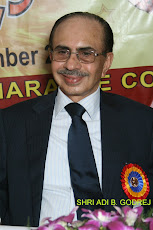
Mr Adi Godrej at the Inauguration Ceremony

Econ Fest 2008

Econ Fest 2008
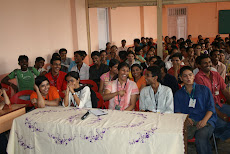
Inter- collegiate Quiz

My Fav books

  • The world is Flat by Thomas Friedman
  • Principles of Economics by Ben Bernanke
  • Micro Economics by Michael Parkin
  • Principles of Economics by Mankiw
  • Arthur Hailey-Money Changers, Hotel, Wheels, Final Diagnosis
  • Barack Obama , The New face of American Politics
  • Undercover Economist - Tim Harford
  • Freakonomics
Powered By Blogger