“Strengthening
Free Enterprise In India”
The Forum of Free Enterprise in association
with the Nani A. Palkhivala Trust and ACC organised The
Thirteenth Nani. A. Palkhivala Memorial Lecture on February 04, 2016,
Thursday at the Tata Theatre, NCPA, Nariman Point, Mumbai.
The lecturer for the event was delivered by one of India’s finest
and dynamic Economist Dr. Raghuram G. Rajan, Governor, Reserve
Bank of India.
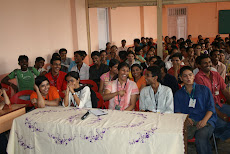
The Governor addressed the crowd of over 800
comprising of students, teachers, Economists and activists on his ideas
about “Strengthening Free Enterprise in India.”
In the beginning Dr. Rajan talked about the great late
Adv. Nani. A. Palkhivala, his heroic achievements and courageous fight for the
free enterprise in India in the post independence era.
He then moved to talk about his ideas about the same
and how we can strengthen free enterprise by motivating the young Indian minds
to be the ‘job creators’ and not
the ‘job seekers.’
He enlisted four points that are very important in
this regard.
1. Need For Free Enterprise:
Fewer Regulations:
Dr. Rajan explained that the free enterprise comes
with a condition of no excess regulations. He pointed that the regulations must
be simple to understand and easily implemented. He said this needs good
regulators, jokingly adding, like himself.
He further added that the government and the
Regulatory Structures (the central bank) are the most important institutions
for the economy to perform well. To make sure no cartels are formed, to ensure
perfect competition amongst players, to ensure no malfunctions in the working
of the market, to ensure no customer or common man is conned. However, in
reality, it is noticed that government and regulatory structures are biased and
affect the good and healthy competition in the economy.
Dr. Rajan emphasised on the observation made by late
Adv. Palkhivala that India always finds a
way in any given problem. Sun
eventually rises in India even after the sunset caused by the casting of a small
man’s shadow.
Coming back, he pointed the need of free entry and
exit, giving an example of his findings about Italy when he was working with
some of the World Bank economists. Dr. Rajan’s team was surprised with the
comparatively slow development of Italy despite having more number of small
firms. As the rumor goes in the economic world that small firms ensure
development, this observation proved to be a criticism for such beliefs. Dr.
Rajan later pointed that the reasons for Italy’s slow development are biased regulations,
license permit raj, inspector raj and corruption. Thus it is very important to
have small firms that will grow big overtime and not the ones that will remain
small. As small firms do solve the problem of unemployment in the short run, it
is necessary for these small firms to grow big and occupy large number of
people. Free enterprise is needed for small firms to grow.
Regulations are necessary, but they must be good and
well enforced for the benefit of the Economy.
Dr. Rajan thinks that India, if it wants to develop
its economy, has to get rid of license permit raj, and inspector raj, to make
sure that new firms do grow big and face fewer obstacles during their infancy
period. He fears that a new resource raj is growing in India. However, he is
very optimistic about India’s future. He also praised the Government’s recent
efforts to encourage new start-ups through their scheme of, “Start-up
India”.
Access to Finance:
Money is the most important tool for development. He
said, we have a wonderful saying in Hindi, “Paisa bolta hai” which, when
translated in English literally means, “Money talks”. People can be
empowered if they have access to credit.
Finance is an important aspect for firms to grow.
Institutional development is one part of the story. He explained, most of the
loans given by big banks are on the basis of character of a person. Also the
process of big banks and their branches is long and hectic. This forces us to
give importance to small banks. Small banks give credit to small investors and
small firms.
Availability of Power:
Countries ability to pull in resources and power is
also another important element. Here, by power he meant the capital (machines
and technology), industrial plants, facilities, assets, natural resources,
supply of electricity and water, space, access to land and infrastructure.
Infrastructure should be provided to the start-ups as
small firms find it difficult to transport their material through air. Also
logistics is a big deal for start-ups as they have to ensure their products
reach on time.
Provision of land is also a big problem for new start-ups
as land availability has become difficult. A firm needs a mass of land to
establish its workshop or factory. Thus, provision of land is very important
for small firms.
Resolution of the living-dead firms:
Dr. Rajan feels it is very important to allow small
firms to exit the market freely if they are not performing well. He is
disappointed with many IT Parks having vacant sheds. The reasons for many empty
sheds are because they are owned by debt ridden companies who couldn’t pay the
rent. This certainly can be changed provided we have laws for easy exit. We can
then certainly have new firms in those empty sheds.
Loan Default and Market Competition:
Dr. Rajan later turned his attention towards
bankruptcy. He was disappointed with loose laws of bankruptcy where large firms
do get away but small firms remain trapped. The bankruptcy code is a necessity,
he said.
Emergence of cartels and monopoly, according to Dr.
Rajan, is a serious problem. However he displayed satisfaction over
strengthening of the Competition Commission of India to prevent cartels from forming.
Dr. Rajan is aware of changing political times where
government is getting work done and talking of development. The reason, he
believes, for entry of competition and reforms in political arena is increasing
pressure from the educated unemployed youth. Demand for jobs is in millions
every year.
2. Protection Of Property Rights:
Great debate on retrospective taxation allowed us to
finalise our stand. Dr. Rajan believes that we need a moderate level of
taxation. He says that improvement in the taxation process has resulted in
transparency and less demand. The current tax levels are comparatively better
than the tax we had some years ago. He is very optimistic about the new Goods
and Service Tax bill (GST) and hopes that the Parliament clears it soon. MNCs
complain high taxation and hence they try to reduce tax or even evade tax over
property rights. This poses a conflict between the government and the
MNCs. Dr. Rajan asked everyone to ensure that we get access to various social
capabilities for success of free enterprise.
3. Access to Capability:
Dr. Rajan briefly talked about the capability of the
entrepreneurs to enter the race of starting and eventually nurturing the
enterprise to a large empire. He compared today’s world to the world in the era
of great Economist, Prof. Adam Smith. He pointed that education and skills were
not the necessity to enter into the business world back then, but today the
fields of finance, accounting and business are growing and are the necessary as
well as the sufficient conditions to enter the competition. Government is thus
providing and encouraging the youth to take up programmes for education and
skill development.
4. Safety Net:
Dr. Rajan emphasised the importance of safety net to
insure individuals from suffering debt. He believes that safety net will make
it easier to take risks. He says that it is about protection of individuals
first and not the firms or organisations as we have to thrive competition in
the market. Organisations can be uplifted or closed but individuals are supposed
to be protected. However, he feels that safety net should be provided to
individuals with respect to our budget. Government's budgetary capacity must be
considered and thus have limited, affordable and reasonable insurance.
At the end of his address, Dr. Rajan said that it was
overwhelming to see new enterprises growing. He is optimistic about the growth
of manufacturing and service sector. He urged all the youngsters to start-up
their own business, as doing business earns a reputation. He praised the
businessmen like the Tatas, the Murthys and the Bansals for their focus on
framework and advised the youth to take inspiration from them.
Dr. Rajan concluded his address by quoting the words
of late Adv. Nani. A. Palkhivala, “India always seems to find a way, perhaps
not quickly, but eventually in due course, for sure.”
As charted and compiled by Raj Kamble, Sanmeeka Deshmukh and Vidhi Anam.
(Members of Forum of Free Enterprise, The Economics Club and students of Ramnarian
Ruia College)



 Posts
Posts


